
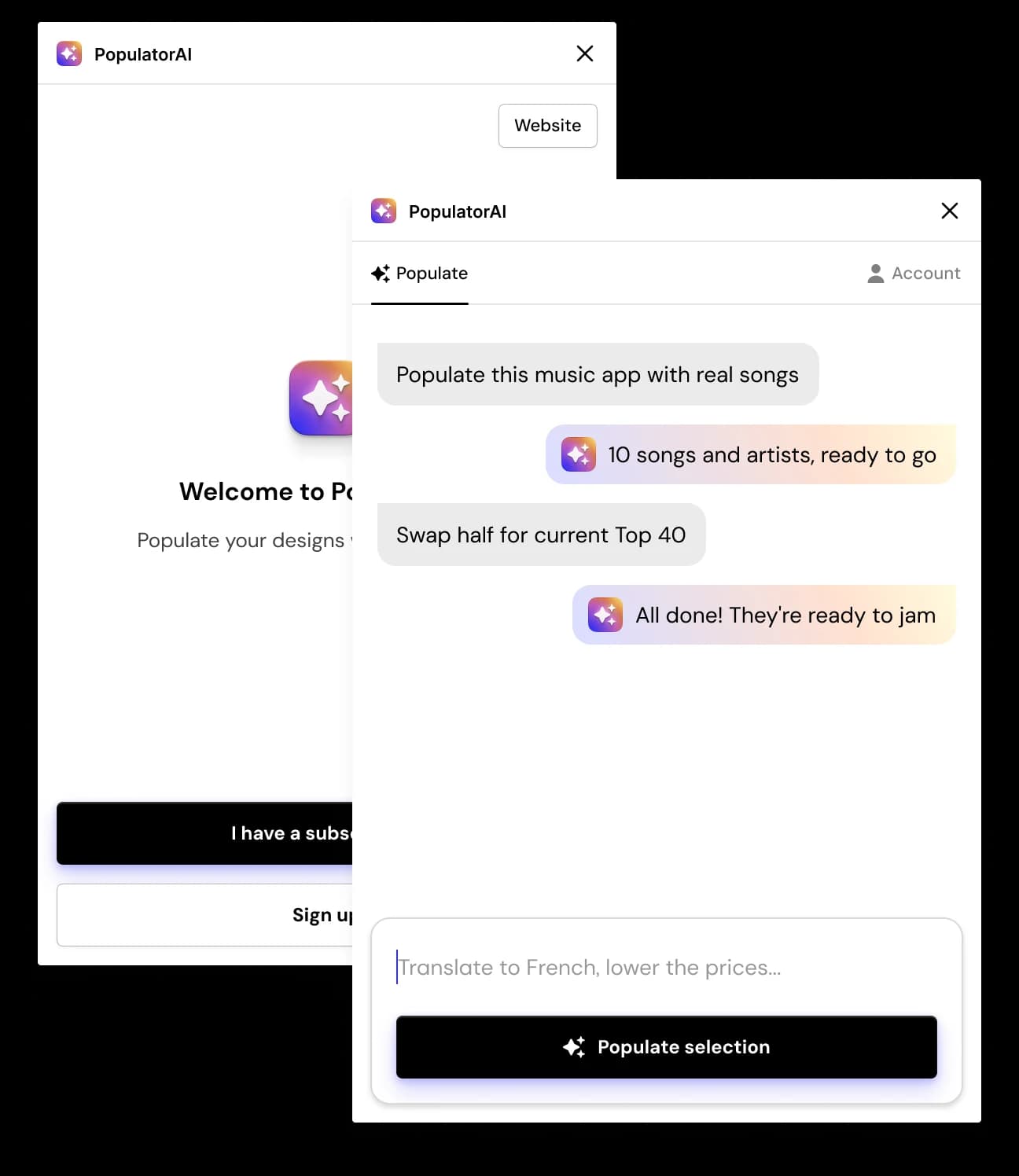
Over the course of a few months, I built PopulatorAI. A Figma plugin that put GPT-3 to work inside the canvas, years before Figma shipped its own AI features. Designers selected text, described what they wanted, and watched the layers populate.
GPT-3 Back then, there was no JSON mode and no function calling. But every response had to come back in a parseable shape to map generated text to the right layer. The early models messed up every few calls. I added schema validation, retried anything that broke, and got it reliable enough to ship. It started working quite well! It wrote copy, swapped placeholders with realistic data, and translated whole designs.

Feedback & Evals Every request went through an API I built to check subscriptions, log outputs, and usage. It collected user feedback, such as ratings and whether the text made it into the design. Downvotes became test cases, and I tuned the prompts until they passed.
Getting Sherlocked PopulatorAI was a small side project, built to find the edges of what the models could do. It sold a few subscriptions along the way, until Figma's own agents made it redundant—a fitting end.